
Why You Should NOT Book a Group-Joining Safari with Kids in Tanzania (Expanded, In-Depth Guide)

Travelling to Tanzania with children can be one of the most educational and inspiring experiences a family can share. However, how you do the safari matters far more than where you go. One of the most common mistakes families make is booking a group-joining (shared) safari, assuming it is easier, cheaper, or “good enough” for kids.
In reality, group-joining safaris are designed for adults, not families. Below is a deep, practical, and experience-driven explanation of why group safaris are unsuitable for children—and what families should choose instead.
1. Group Safaris Are Built for Adult Endurance, Not Children
Most group-joining safaris in Tanzania follow a high-intensity model:
Wake-up calls between 5:00 and 6:00 AM
Full-day game drives of 7–10 hours
Long transfers between parks on rough, dusty roads
Minimal flexibility once the itinerary starts
This structure works for adults chasing sightings. It does not work for children who need:
Sleep consistency
Snack breaks
Toilet stops
Downtime
In a shared safari, the vehicle moves when the group moves—not when your child needs a break.
2. Long Distances + Fixed Routes = Physical & Mental Fatigue
Tanzania’s northern safari circuit entails significant travel time between parks such as Arusha, Serengeti National Park, and Ngorongoro Conservation Area.
On a group safari:
You cannot shorten routes
You cannot stop freely for motion sickness
You may spend hours collecting or dropping off other guests
For children, this leads to:
Overstimulation
Headaches and nausea
Emotional burnout by day two or three
A tired child doesn’t enjoy wildlife—and neither do their parents.
3. Safety Limitations in Shared Safari Vehicles
Safety is one of the most overlooked considerations in family group safaris.
Common realities:
No guaranteed child seats
Crowded 4×4 vehicles with limited movement
Children are forced into the middle or back seats without clear visibility
No control over how long children must remain seated
Young kids struggle to sit still for extended periods. In shared vehicles, this becomes stressful and potentially unsafe.
A private safari allows:
Proper seating arrangements
More frequent stops
Calm, controlled driving pace
4. Social Friction: Kids vs Adult Expectations
Group safaris mix travellers with very different goals:
Photographers who want silence
Couples on honeymoon
Solo travellers on tight schedules
Children naturally:
Ask questions
Get excited
Lose focus
Need reassurance
Parents often feel pressure to quiet their children, apologise, or rush moments—turning a family holiday into a stressful balancing act.
A safari should never make families feel like they are “disturbing” others.
5. Inflexible Game Drives Reduce Learning for Kids
Children experience safaris differently from adults. They benefit from:
Shorter game drives
Repetition and storytelling
Time to process what they’re seeing
In group safaris:
Guides must cater to the loudest or most demanding adults
Stops are extended only for “big sightings”
Educational interaction with kids is minimal
This results in missed learning opportunities, with children becoming bored rather than inspired.
6. Standard Group Lodges Are Not Family-Oriented
Most group safaris use fixed, budget-optimised lodges chosen for efficiency, not family suitability.
Common problems:
No family rooms or interconnected tents
Strict lodge rules (quiet hours, limited movement)
Menus not adapted for children
Wildlife roaming near tents, increasing supervision stress
Parents spend evenings managing logistics instead of resting.
7. Health, Hygiene & Recovery Challenges
Children are more sensitive to:
Heat
Dehydration
Dietary changes
Dust exposure
Group safaris rarely allow:
Adjusted meal times
Custom food requests
Extra rest during the day
When kids fall ill or become exhausted, there is no flexibility to slow down—the group continues regardless.
A private safari transforms the experience completely.
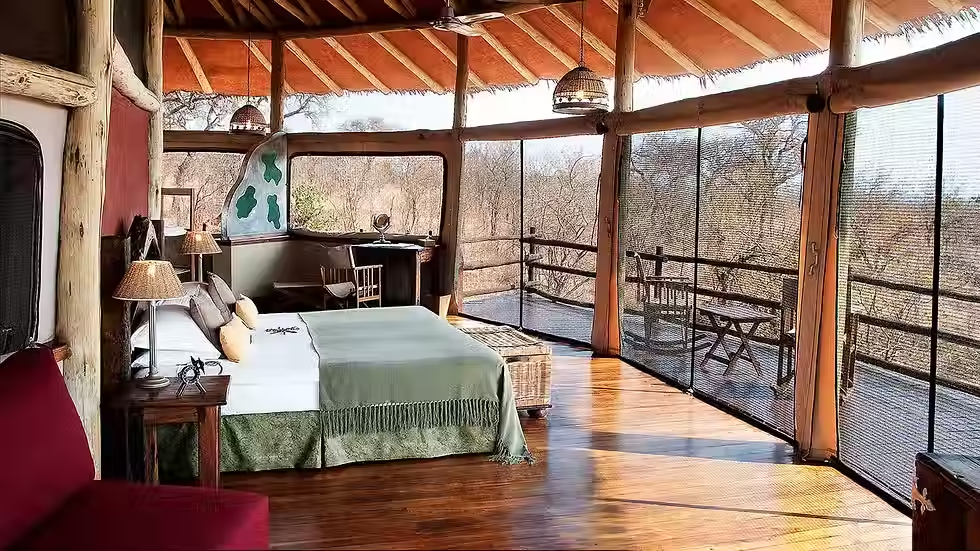
Why Private Safaris Work for Families
✔ Flexible daily schedules
✔ Private 4×4 safari vehicle
✔ Child-focused, patient guides
✔ Shorter, customised game drives
✔ Family-friendly lodges and camps
✔ Safer seating and pacing
Parents relax. Kids engage. The safari becomes meaningful—not exhausting.
Cost Myth: Private Safaris Are Often Comparable
Contrary to popular belief:
A private safari for a family of 4–5 can cost only slightly more than a group safari
There are no hidden compromises
The value per day is dramatically higher
When children are involved, comfort, safety, and flexibility outweigh marginal savings.
Final Thought: Tanzania Is Amazing for Kids—If Done Right
Tanzania offers unparalleled wildlife, landscapes, and cultural exposure for children. But a group-joining safari is not the right format for families.
If you are travelling with kids:
Avoid shared safaris
Avoid rigid itineraries
Avoid one-size-fits-all vehicles and lodges
Choose a private, tailor-made family safari built around your children—not around strangers.


Comments